
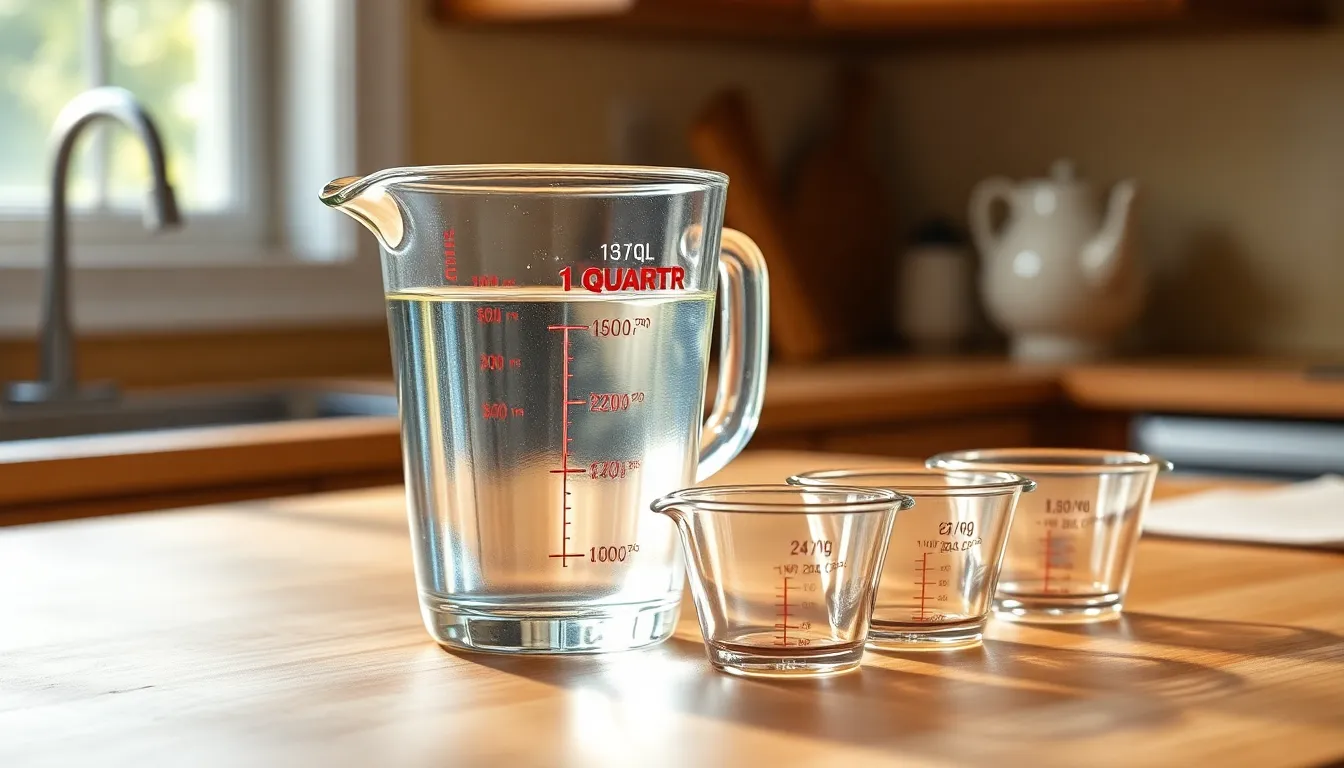
When it comes to cooking and baking, precision is key. But who hasn’t found themselves in a measurement muddle? One minute you’re pouring water into a pot, and the next, you’re wondering how many cups are in a quart. Spoiler alert: it’s four! Yes, that’s right—1 quart equals 4 cups of water. It’s as if the universe conspired to make cooking just a little more confusing.
Understanding Measurements
Measuring ingredients accurately plays a crucial role in cooking. This section explains key terms related to quart and cup measurements.
What Is a Quart?
A quart is a unit of volume measurement commonly used in the United States. It measures liquids and solid ingredients. One quart equals 32 fluid ounces or 4 cups. This conversion ensures consistency in recipes, making it easier to replicate successful dishes. Quarts are often found in recipes that require larger quantities, such as soups, stews, and marinades. Understanding this measurement helps cooks adjust portion sizes or scale recipes for different needs.
What Is a Cup?
A cup serves as a standard unit for measuring both liquid and dry ingredients in cooking. It contains 8 fluid ounces. Most recipes rely on cups for convenience and simplicity, enabling quick and easy calculations. Cups are used for measuring a variety of items, including flour, sugar, and liquids. Knowing how to convert cups into quarts enhances precision in cooking, particularly when scaling recipes. Accurate measurement allows for consistent results, making the cooking process more effective.
Conversion Basics
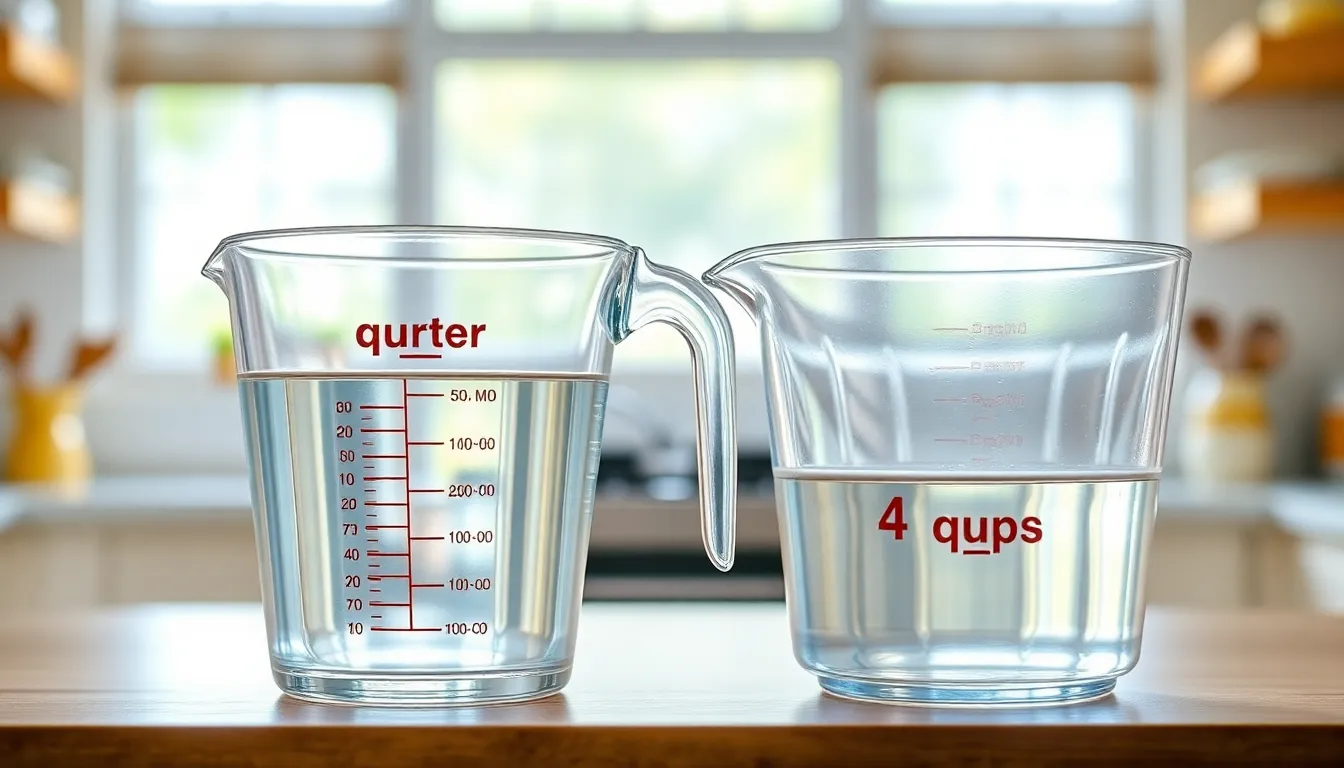
Understanding conversions in cooking simplifies meal preparations. One quart equals 4 cups. This clear relationship makes it easy to scale quantities in recipes.
How to Convert 1 Quart to Cups
To convert 1 quart to cups, divide the quart measurement by the conversion factor of 4. For example, 1 quart multiplied by 4 equals 4 cups. When measuring liquids, using measuring cups specifically marked for volume ensures accurate results. It’s beneficial to keep this conversion in mind when adapting recipes, especially those calling for larger volumes.
Importance of Accurate Measurements
Accurate measurements impact the outcome of recipes. Inconsistent ingredient amounts can lead to undesirable results, particularly in baking. For instance, 1 quart of water converted correctly into 4 cups ensures uniform hydration in dough. Reliable measuring techniques maintain recipe integrity, fostering successful cooking experiences. Precision not only enhances flavor but also promotes better texture in the final dish.
Practical Applications
1 quart converts to 4 cups, making this knowledge crucial for various tasks in daily life.
Cooking and Baking
In cooking, accuracy enhances flavor and texture. Knowing that 1 quart equals 4 cups helps chefs scale recipes seamlessly. For instance, a soup recipe calling for 2 quarts needs 8 cups. Following these conversions promotes consistency in meal preparations. Accurate measurements prevent disastrous results in baking, where precision often dictates success. Using marked measuring cups ensures liquids and dry ingredients are correctly measured.
Daily Water Intake
Hydration remains essential for overall health. The general recommendation suggests adults consume about 2 to 3 liters of water daily. Understanding that 1 quart equals 4 cups means drinking the recommended amount requires roughly 8 to 12 cups of water each day. This conversion aids individuals in maintaining proper hydration levels. Filling a quart-sized bottle can simplify tracking daily water consumption, making it easier to stay on top of hydration goals. Prioritizing consistent water intake supports bodily functions and overall wellness.
Common Mistakes
Many people struggle with measurements in cooking and baking. Misunderstanding volume measurements frequently leads to mistakes in recipe outcomes. A quart may seem similar to a cup, but the difference becomes significant when scaling recipes. Knowing that 1 quart equals 4 cups helps eliminate confusion. This clarity enhances overall cooking accuracy, especially when preparing larger quantities.
Using incorrect measuring tools can also cause issues. Accurate volume measurement relies on specific tools designed for liquids versus dry ingredients. For instance, liquid measuring cups often feature a spout for pouring, while dry measuring cups ensure precise measurement without levelling. Choosing the right tool directly affects ingredient ratios, impacting flavors and textures in finished dishes. Familiarizing oneself with the appropriate measuring implements prevents common mistakes and promotes better cooking practices.
Understanding the conversion of 1 quart to 4 cups is essential for anyone who enjoys cooking or baking. This knowledge not only simplifies meal preparation but also ensures consistency in recipes. Whether scaling up for a gathering or tracking daily water intake, accurate measurements play a crucial role in achieving desired results.
By using the right measuring tools and familiarizing oneself with these conversions, individuals can enhance their culinary skills and avoid common pitfalls. Ultimately, mastering these basics can lead to more enjoyable and successful cooking experiences.


