
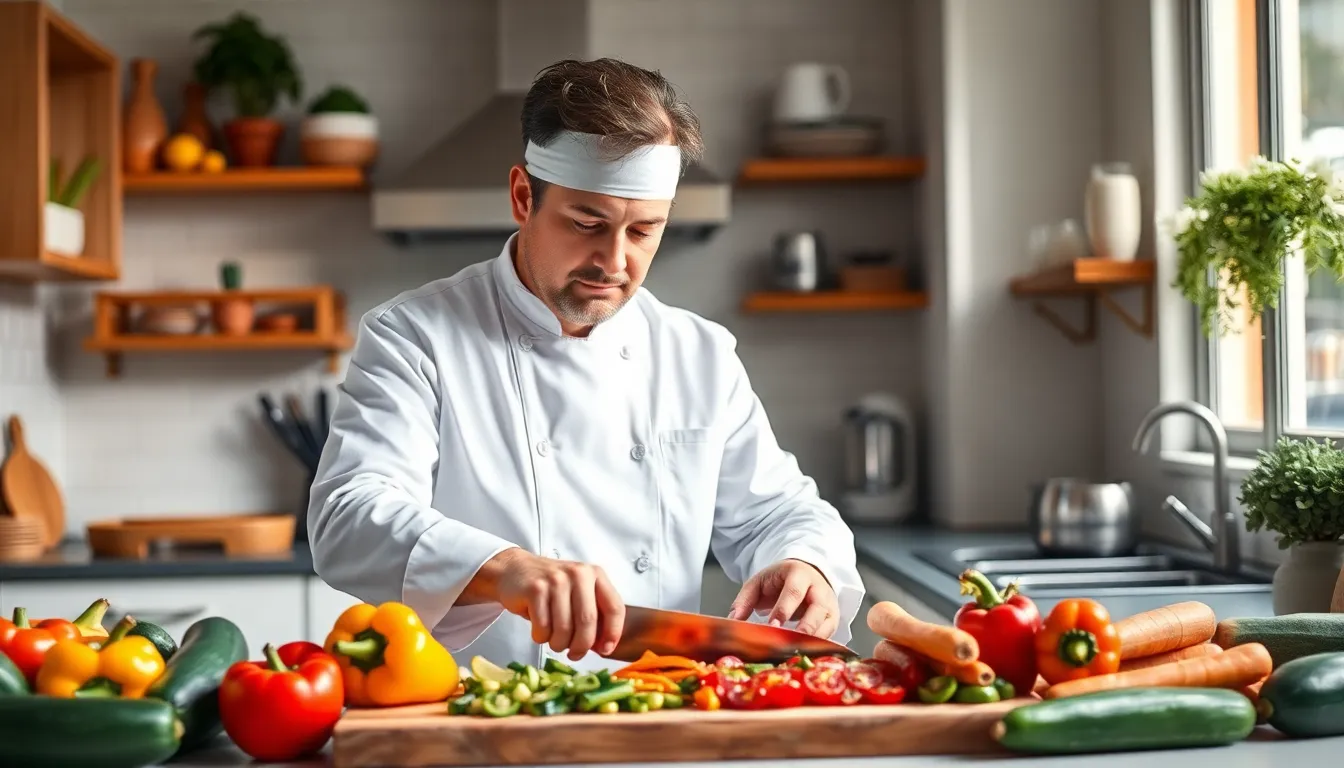
In a world where gourmet meals reign supreme, vegetable slicing is the unsung hero of the kitchen. It’s not just about chopping and dicing; it’s about transforming humble veggies into culinary masterpieces. Imagine a colorful salad that makes your taste buds dance or a stir-fry that looks like it jumped off a magazine cover. Perfectly sliced vegetables can elevate any dish from drab to fab, and let’s be honest, they make for a pretty Instagram post too.
Overview of Vegetable Slicing
Vegetable slicing plays a crucial role in culinary presentation and flavor enhancement. Proper slicing techniques elevate dish appeal, making meals look professional. Various styles exist, including julienne, chiffonade, and dice. Each cut serves a specific purpose, contributing to texture and visual interest.
Well-sliced vegetables ensure even cooking, providing a perfect blend of flavors. Consistent sizes also facilitate portion control and improve meal aesthetics. Utilizing sharp knives or mandolins leads to cleaner cuts and minimizes bruising, preserving freshness.
Presentation skills enhance social media engagement, inviting diners to share their meals. Creative slicing can transform basic vegetables into artistic arrangements. For instance, spiralized zucchini creates a fun alternative to pasta while retaining nutrients.
Understanding different slicing methods equips cooks with valuable skills. Mastering techniques like dicing onions or slicing bell peppers makes meal prep efficient. It’s beneficial to practice regularly, refining one’s skills over time.
Moreover, sliced vegetables store better when sealed in containers, maintaining crispness for longer. Many experienced chefs recommend prepping ingredients ahead of time for streamlined cooking. Freshly sliced vegetables can retain nutrients and flavor, making them a healthier choice in any dish.
Cultivating vegetable slicing skills is essential for any culinary enthusiast. It opens up possibilities for creativity while ensuring delicious, visually appealing meals.
Benefits of Proper Vegetable Slicing
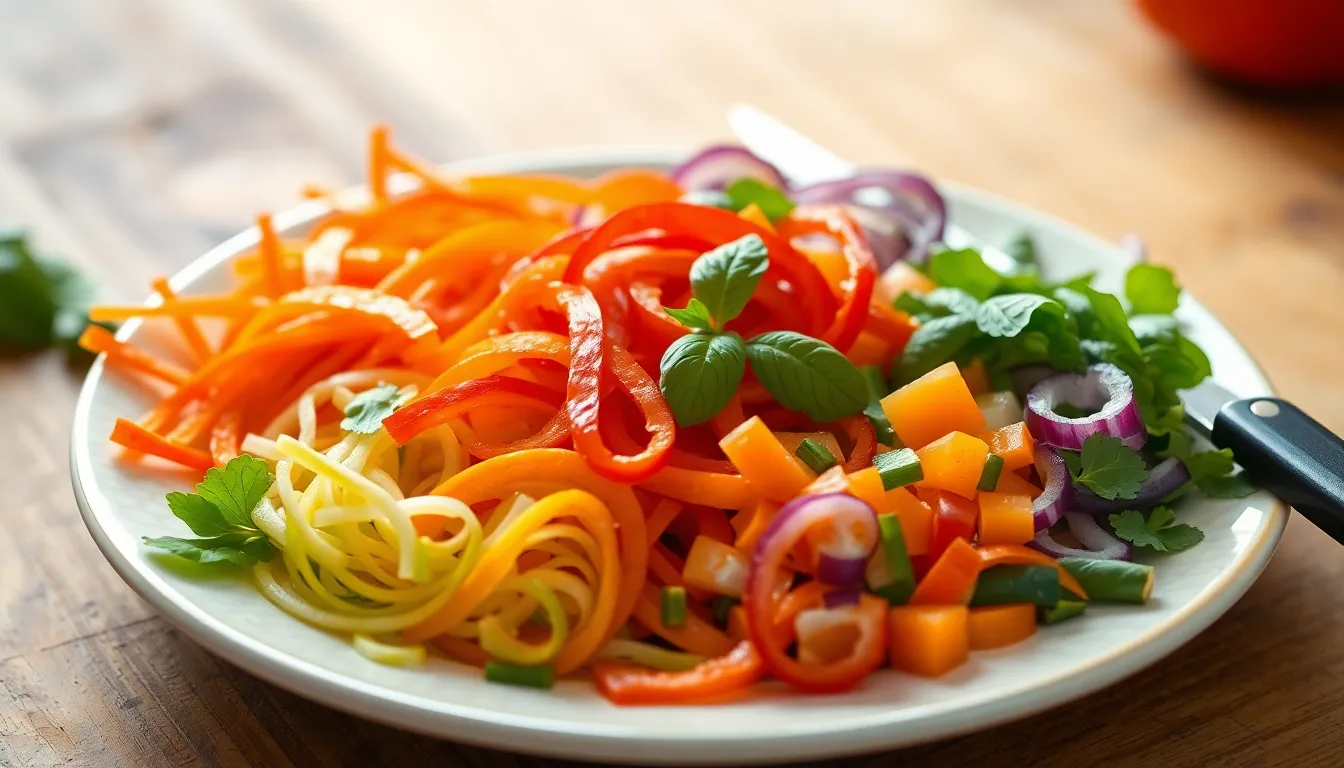
Proper vegetable slicing offers numerous advantages in culinary practices. It elevates both flavor and presentation, enabling home cooks and chefs alike to create stunning dishes.
Enhancing Presentation
Visual appeal matters in cooking. Beautifully sliced vegetables contribute to vibrant dishes that entice diners. Techniques like julienne or chiffonade showcase color and texture, enhancing overall aesthetics. Plating with precision attracts attention on social media platforms, encouraging engagement. An eye-catching salad or stir-fry not only stimulates appetite but also transforms ordinary meals into culinary art. Precision in slicing reveals the chef’s attention to detail, which can impress guests during gatherings or events.
Improving Cooking Times
Slicing vegetables uniformly influences cooking efficiency. Smaller, evenly cut pieces cook faster than larger chunks, promoting even heat distribution. For instance, diced onions and peppers soften quickly in a sauté pan, reducing overall meal preparation time. Mastering various slicing techniques aids in faster meal assembly, which is crucial for busy lifestyles. Properly sliced vegetables also maintain consistent textures, preventing overcooking. Time saved in the kitchen leads to quicker serving, allowing diners to enjoy meals promptly.
Tools for Vegetable Slicing
Various tools simplify the art of vegetable slicing, allowing for precision and uniformity. Selecting the right tool enhances both efficiency and aesthetics in food preparation.
Knives
Knives serve as essential instruments for slicing vegetables. Chefs commonly recommend using chef’s knives or paring knives for versatility. Sharp blades create clean cuts, maintaining the vegetables’ freshness and visual appeal. The length and weight of the knife impact control and maneuverability. A comfortable grip allows for longer use without fatigue. Practicing various slicing techniques, such as julienne or chiffonade, showcases the diverse capabilities of knives.
Mandolins
Mandolins provide an excellent solution for achieving uniform slices quickly. Adjustable blades allow users to select slice thickness, enhancing the ability to create different textures. These tools excel in producing thin, consistent slices essential for salads or garnishes. Safety features, such as hand guards, help minimize the risk of injury while slicing. Lemons or cucumbers sliced on a mandolin can transform salads with minimal effort. Clean, easy-to-use designs often make clean-up a breeze after food preparation.
Food Processors
Food processors offer speed and convenience for vegetable slicing. Equipped with various blades, they simplify the slicing process for large quantities of vegetables. Users can quickly create bulk cuts, which is ideal for meal prep or large gatherings. Precise slicing options reduce prep time significantly, allowing for quick assembly of dishes. Dicing, shredding, and slicing all become effortless when utilizing a food processor. For those seeking efficiency, this tool remains invaluable in any kitchen setting.
Techniques for Effective Vegetable Slicing
Mastering vegetable slicing involves specific techniques that elevate preparation skills. These techniques enhance both flavor and presentation.
Uniform Cuts
Uniform cuts ensure even cooking and appealing presentation. For instance, consistent sizes allow vegetables to cook at the same rate, reducing the chances of overcooking or undercooking. Different techniques like julienne, dice, and chiffonade create various shapes that bring visual interest to dishes. Chefs often rely on knives, mandolins, or food processors to achieve these uniform cuts quickly and efficiently. When vegetables are sliced uniformly, they not only look better but also make dishes more enticing, whether for family meals or social media sharing.
Safety Tips
Safety remains paramount during vegetable slicing. Utilizing a stable cutting board prevents slipping and minimizes accidents. A sharp knife facilitates cleaner cuts and requires less pressure, thereby reducing the risk of injury. Additionally, proper hand positioning, such as the claw grip, protects fingers while slicing. Staying focused during the slicing process also helps avoid mistakes. Finally, cleaning up the workspace immediately prevents potential slips, ensuring a safe cooking environment. Implementing these safety tips leads to a smoother slicing experience and promotes confidence in the kitchen.
Mastering vegetable slicing is a game changer for anyone in the kitchen. It not only enhances the flavor of dishes but also elevates their visual appeal. By applying various slicing techniques and using the right tools, cooks can create stunning presentations that impress family and friends.
Investing time in learning these skills pays off in efficiency and creativity. With proper slicing, meals become not just food but an art form that invites engagement, especially on social media platforms. Embracing the art of vegetable slicing opens up a world of culinary possibilities, making every meal a delightful experience.


