
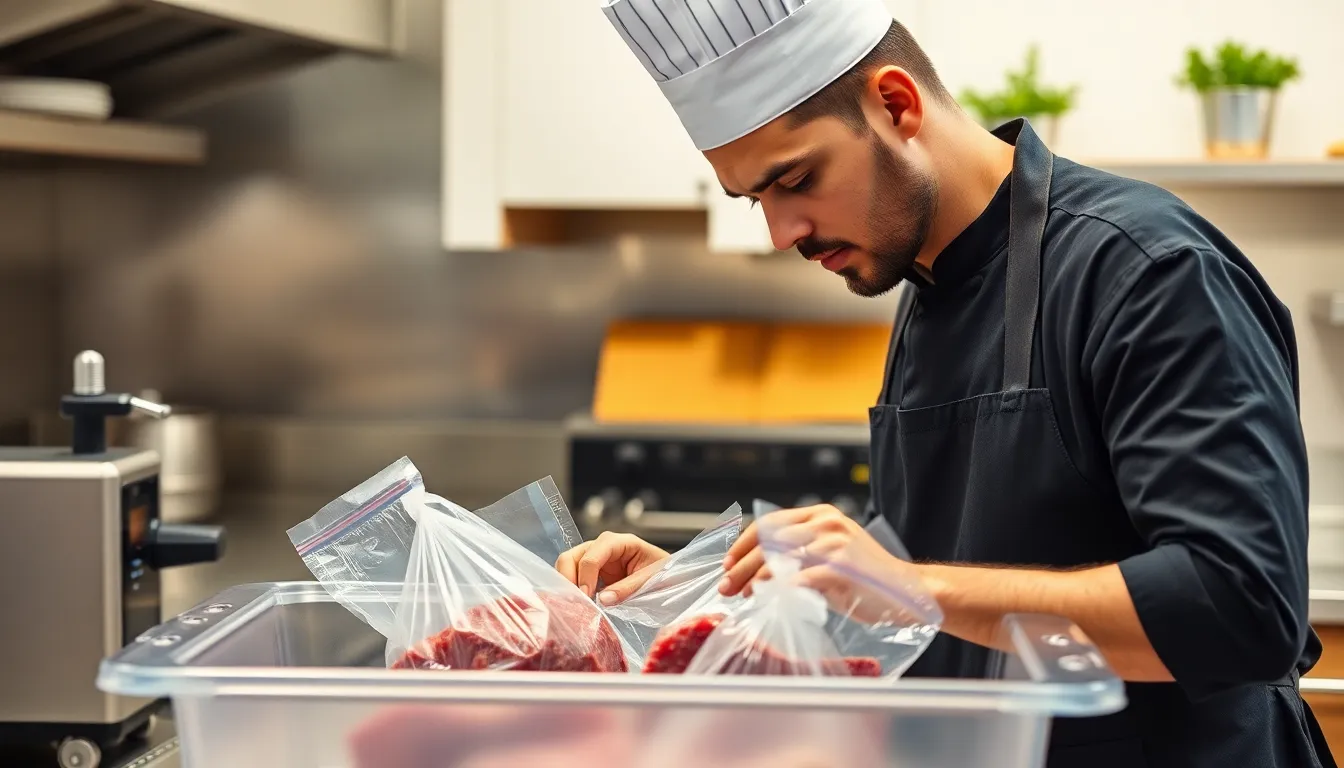
Imagine a world where your steak is cooked to perfection, every single time, without the guesswork. Welcome to the delightful realm of sous vide cooking, where precision meets culinary magic. This method, which involves sealing food in a bag and immersing it in a temperature-controlled water bath, turns even the most novice chef into a kitchen wizard.
What Is Sous Vide Cooking?
Sous vide cooking involves vacuum-sealing food in a bag and submerging it in a precisely controlled water bath. This technique maintains consistent temperatures, allowing for even cooking throughout the entire food item. Steak often exemplifies this method, emerging from sous vide cooking tender and juicy, free from overcooked edges.
Precision plays a vital role in sous vide cooking. Setting the water temperature accurately allows food to cook evenly without the risk of burning. For example, a steak cooked at 130°F (54°C) in sous vide will achieve the perfect medium-rare doneness throughout, unlike traditional cooking methods.
Versatility is another advantage of sous vide cooking. This method accommodates various foods beyond meat, including vegetables and eggs, each benefiting from tailored cooking times and temperatures. Cooking carrots at 183°F (84°C) for 1 hour enhances their natural sweetness while ensuring a tender texture.
Equipment for sous vide cooking typically includes an immersion circulator or a water bath. Immersion circulators maintain water temperature, creating a stable environment for cooking. Many home cooks now find this equipment accessible, with several affordable options on the market.
Safety considerations also warrant attention. Cooking sous vide requires maintaining proper temperature for sufficient duration to eliminate harmful bacteria. Guidelines suggest cooking poultry at 165°F (74°C) for at least 1 second or keeping it at 140°F (60°C) for a longer time, allowing thorough pasteurization.
Cooking sous vide not only guarantees consistent results but also promotes innovative culinary exploration. Chefs can experiment with flavors, spices, and cooking times to achieve unique dishes tailored to individual preferences. This method democratizes high-level cooking techniques, empowering home cooks to achieve restaurant-quality meals effortlessly.
Benefits of Sous Vide Cooking
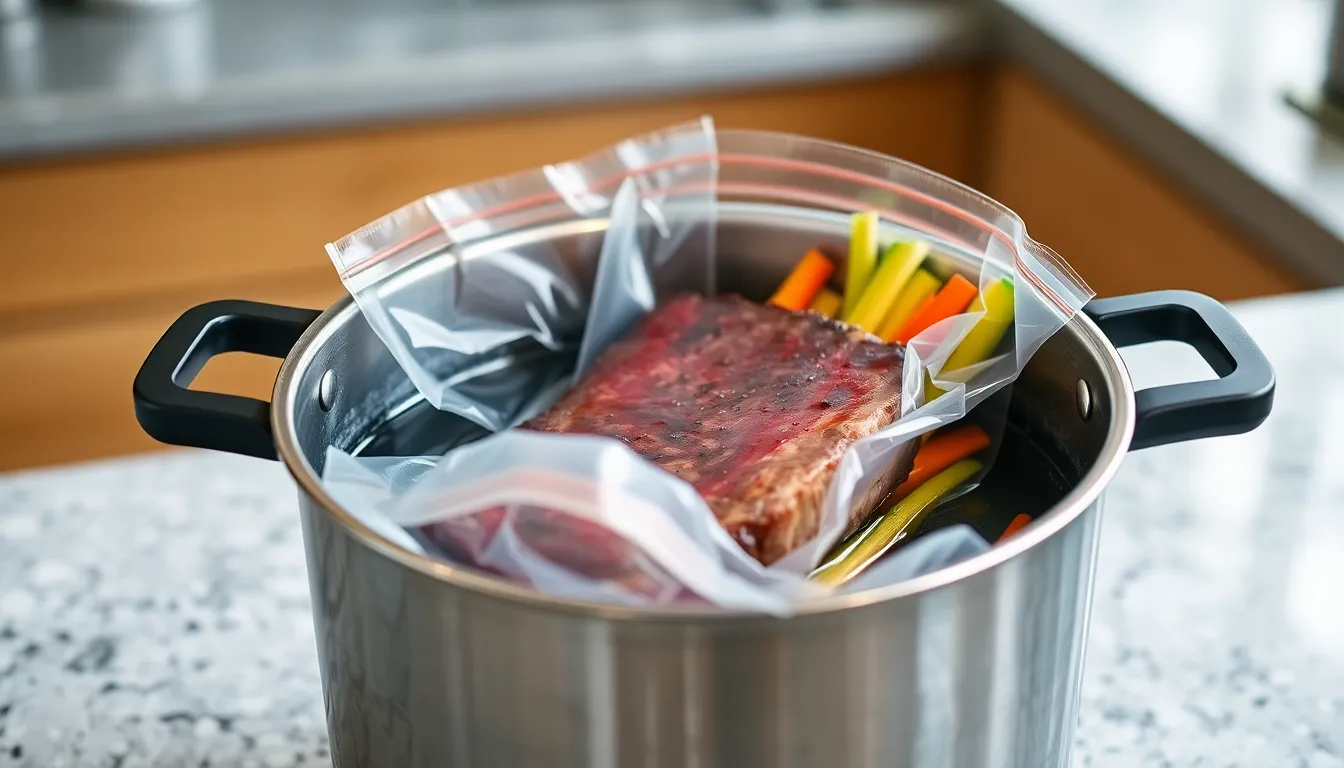
Sous vide cooking offers unique advantages that enhance meal preparation. This technique elevates flavor and texture, alongside precise cooking control.
Improved Flavor and Texture
Enhanced flavor and texture characterize sous vide cooking. By sealing food in airtight bags, it locks in juices and natural flavors. Cooking at low, consistent temperatures prevents moisture loss. This results in tender meat, exceptional vegetables, and creamy eggs. For instance, a steak retains all essential flavors, delivering a restaurant-quality experience at home. Vegetables become vibrant and flavorful, showcasing their natural sweetness. Each bite feels both satisfying and rich, appealing to diverse palates.
Precision in Cooking
Precision defines sous vide cooking. Temperature settings remain consistent, ensuring uniform cooking results. Chefs determine exact doneness levels, such as maintaining steak at 130°F (54°C) for medium-rare. This technique eliminates the uncertainties associated with traditional cooking methods, like grilling or baking. Timing becomes straightforward, allowing for a more relaxed cooking atmosphere. Precise control also minimizes the risk of overcooking. Each dish emerges exactly as intended, delivering predictable outcomes every time. The combination of temperature stability and exact timing guarantees culinary success.
Essential Equipment for Sous Vide Cooking
Essential tools enhance the sous vide cooking experience, ensuring precision and ease. Two primary pieces of equipment stand out: immersion circulators and vacuum sealers.
Sous Vide Immersion Circulators
Immersion circulators are critical for sous vide cooking. They maintain consistent water temperatures, essential for achieving the desired doneness. Many models offer detailed control and can heat water within a fraction of a degree. Affordable options are widely available, making them accessible for home cooks. Some circulators even connect to smartphones for added convenience. Various brands compete in quality and performance, such as Anova and Joule, popular for their reliability and user-friendly interfaces.
Vacuum Sealers
Vacuum sealers play an important role in sous vide cooking. These devices remove air from bags, preventing oxidation and moisture loss. Sealing food airtight locks in flavors and juices, enhancing overall taste and texture. Numerous options exist, including handheld models and chamber vacuum sealers. Chamber sealers cater to larger quantities but come at a higher cost. Food-grade vacuum bags specifically designed for sous vide can withstand water temperatures while ensuring food safety. Regular use of vacuum sealers greatly enhances the success of sous vide meals.
Tips for Successful Sous Vide Cooking
Sous vide cooking requires attention to detail for optimal results. Understanding temperature and timing enhances the overall experience.
Temperature Guidelines
Temperature precision is vital in sous vide cooking. Cooking steak at 130°F (54°C) achieves that perfect medium-rare doneness. Adjust temperatures based on personal preferences, such as 140°F (60°C) for medium or 150°F (65°C) for medium-well. Non-steak items also benefit from exact temperatures; for instance, cooking chicken at 165°F (74°C) ensures safe consumption. Vegetables require specific heat as well; carrots typically cook well at 183°F (84°C) for ideal texture. Use a reliable immersion circulator to maintain these precise temperatures throughout the cooking process.
Cooking Times
Cooking times significantly influence the end result in sous vide. Most cuts of steak need only 1 to 4 hours, depending on thickness. A 1-inch thick filet mignon cooks for around 1 hour, while a thicker cut could go for 2 to 3 hours. Chicken breasts require longer baths, typically 1.5 to 2 hours for the juiciest results. For vegetables, the timings vary further; asparagus cooked for 10 to 15 minutes produces a bright, tender outcome. Cooking times may also differ based on the desired texture, enhancing the flexibility of this technique. Tracking time closely is essential for achieving the best flavors and textures.
Popular Sous Vide Recipes
Sous vide cooking offers a range of delicious recipes that cater to different tastes. Steak stands out as a favorite. Cooking steak at 130°F (54°C) for medium-rare yields tender and juicy results.
Chicken breast is another popular option. At 165°F (74°C), chicken breasts become perfectly cooked, moist, and flavorful. Cooks can infuse herbs and spices in vacuum bags to enhance the taste further.
Vegetables shine in sous vide cooking. Carrots cooked at 183°F (84°C) achieve a vibrant texture and natural sweetness. Asparagus at 185°F (85°C) retains its bright color and crispness, bringing out the best in seasonal produce.
Egg dishes can also benefit from this technique. Cooking eggs at 167°F (75°C) for 13 minutes results in creamy textures ideal for salads or breakfast bowls. Soft-boiled eggs with rich yolks provide an excellent finishing touch to various dishes.
Fish lovers can enjoy perfectly cooked salmon. Sous vide salmon at 125°F (52°C) for 45 minutes creates buttery fillets with exceptional flavor. Experimenting with citrus and dill adds an extra layer of freshness.
Finally, desserts can find their place in sous vide cooking. Chocolate pots de crème, when cooked at 176°F (80°C) for 1 hour, become rich and silky, perfect for indulgent evenings.
These recipes illustrate the versatility of sous vide cooking. Each dish showcases the technique’s ability to produce consistent and delicious results, enhancing the overall culinary experience.
Sous vide cooking stands out as a game-changer in the culinary world. Its precision and versatility make it an ideal choice for both novice and experienced cooks. By mastering this technique, anyone can achieve restaurant-quality meals at home with minimal effort. The ability to lock in flavors and achieve perfect doneness elevates the dining experience.
With affordable equipment and accessible recipes, sous vide is no longer reserved for professional kitchens. Embracing this method opens up a world of culinary possibilities. Whether it’s a perfectly cooked steak or vibrant vegetables, sous vide cooking empowers home chefs to explore and innovate in their kitchens.


